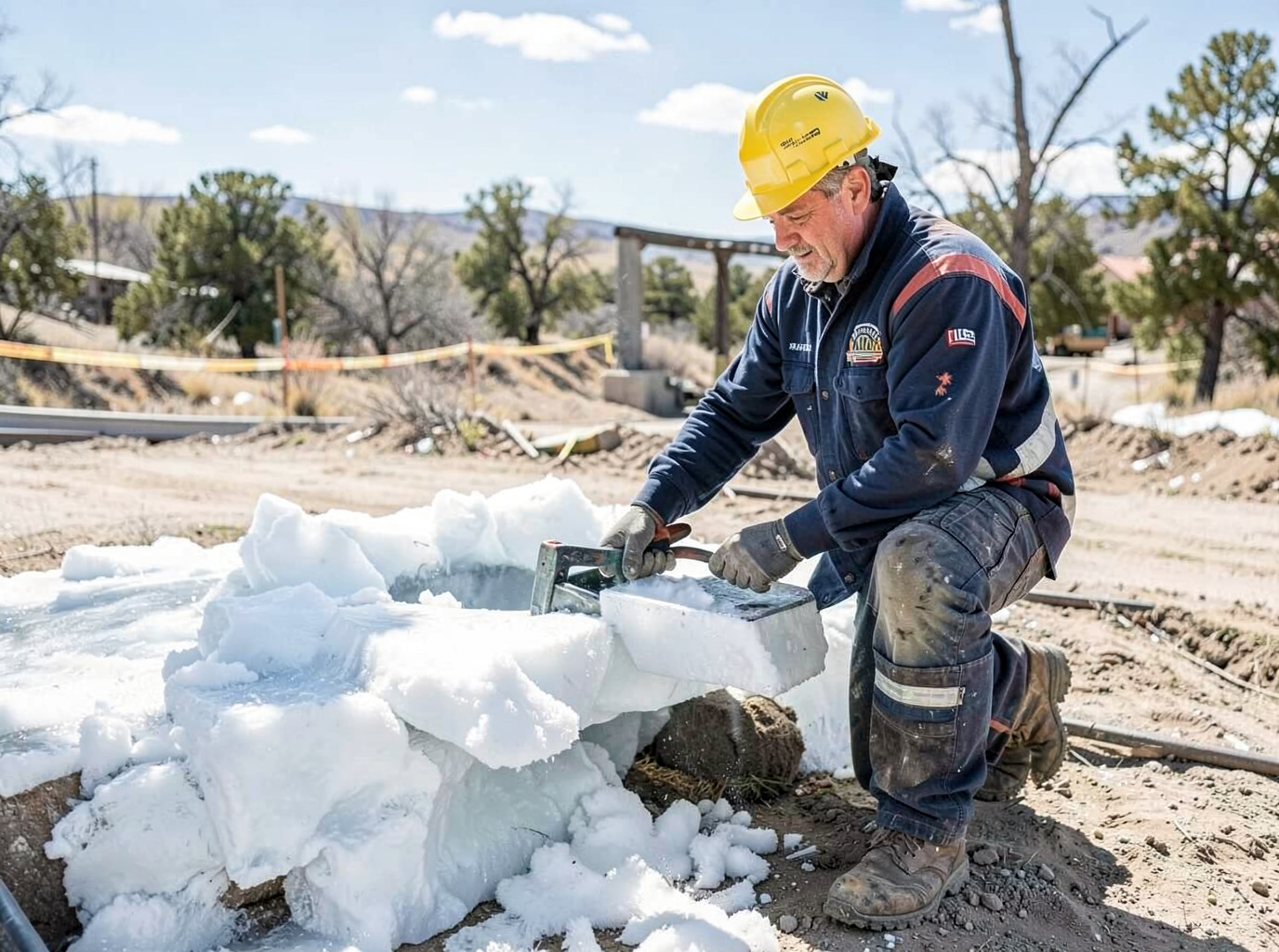
Cheyenne's cold semi-arid winters bring repeated freeze-thaw cycles that turn roof meltwater into ice dams along eaves, especially on older homes in the Historic District and Capitol Hill where steep pitches and limited insulation are common. Wind from the open plains packs snow into valleys and gutters faster than in sheltered neighborhoods like Lakeview. Left untreated, water backs up under shingles and soaks sheathing, creating leaks that show up weeks later in attics over South Cheyenne and East Cheyenne houses.
We start with infrared scans and physical probing to locate the exact dam line without unnecessary roof damage. For prevention we install self-regulating heat cables sized for Cheyenne's typical 20–30 mph winter winds, then add ice-and-water shield extensions where the roof meets the wall. Homes near the Wyoming State Capitol or Cheyenne Depot Museum often have complex rooflines that require custom cable routing to keep melt paths open all season.
In Laramie County we see the worst problems on 1940s–1970s stock with single-layer shingles and narrow gutters. After removal we clear ice from downspouts so water reaches the ground instead of refreezing on driveways. We also check flashing around chimneys and skylights that sit in the path of drifting snow from the Cheyenne Frontier Days Arena area.
Nearby towns such as Burns and Carpenter experience the same wind patterns but with fewer tree buffers, so dams form even on newer roofs. We adjust cable wattage and placement accordingly rather than using one-size-fits-all kits.
Technician insight
In Cheyenne the thing that catches most people out with Ice Dam Removal & Prevention is how wind packs snow under the overhangs of 1950s homes in South Cheyenne and East Cheyenne, creating dams that standard roof rakes miss entirely. Once the ice reaches the wall line, water travels sideways under the shingles and shows up inside walls instead of at the eaves.
Lakeview two-story with recurring ceiling stains
Heavy snow followed by a warm spell sent meltwater under the eaves of a 1960s Lakeview home. We found a six-foot ice dam hidden behind the gutter. After steam removal and heat cable installation along the north-facing valley, the homeowner reported no new moisture during the next freeze-thaw cycle.
Ice Dam Removal & Prevention Services We Offer
✓Emergency Ice Dam Removal
Rapid on-site cutting and steam removal to stop active leaks before water reaches ceilings in Capitol Hill or North Cheyenne homes.
✓Roof Heat Cable Installation
Self-regulating cable systems routed along eaves and valleys to keep meltwater flowing during Cheyenne's freeze-thaw cycles.
✓Gutter and Downspout Clearing
Full removal of packed snow and ice from gutters serving older homes in the Historic District and Sunnyside neighborhoods.
✓Ice Dam Prevention Inspection
Detailed roof-edge and attic review that flags insulation gaps common in West Cheyenne and South Cheyenne housing stock.
✓Ice and Water Shield Retrofit
Targeted membrane upgrades under existing shingles to block water intrusion on roofs exposed to Laramie County winds.
Ice Dam Removal & Prevention Cost in Cheyenne, WY
| Service | Typical Range | What Affects It |
|---|---|---|
| Ice dam assessment | $125–$250 | Higher for two-story homes in Capitol Hill or Historic District with limited ladder access. |
| Emergency removal | $350–$750 | Depends on dam length and whether attic entry is needed. |
| Heat cable installation | $600–$1,400 | Varies by linear feet and roof complexity on older Laramie County homes. |
| Gutter clearing add-on | $150–$300 | Lower when done same day as removal. |
Ranges are typical for Cheyenne, WY and confirmed with an exact written quote before any work starts.
How it works
- 1
Site Assessment
We inspect from the ground and attic, noting snow load, roof pitch, and existing cable or shield conditions on the specific Cheyenne address.
- 2
Safe Removal
Steam or manual methods clear the dam while protecting shingles and avoiding damage to older cedar or asphalt surfaces common in the Historic District.
- 3
Prevention Work
Heat cables, shield extensions, or gutter work are installed based on the home's age and exposure to prevailing winds.
- 4
Final Check
We verify water flow to the ground and confirm no new leaks appear after the next warm-up cycle.
Pricing
Pricing varies with roof height, access, and whether heat cables are added.